Frozen in Time
The science and history of the Coudersport Ice Mine.
Introduction
Deep within the Allegheny Mountains of Potter County, Pennsylvania, lies a geologic anomaly that has baffled scientists and captivated tourists for over 130 years. Known as the Coudersport Ice Mine, this vertical shaft in the side of "Ice Mountain" offers a startling reversal of the seasons: thick ice forms during the heat of spring and summer, only to vanish when the winter snows arrive.
Current owners Gary and Diana Buchsen continue a legacy of hospitality that began in the late 19th century, inviting modern travelers to witness what many once called the "Devil's Ice Box."
The Legend and the Search for Silver
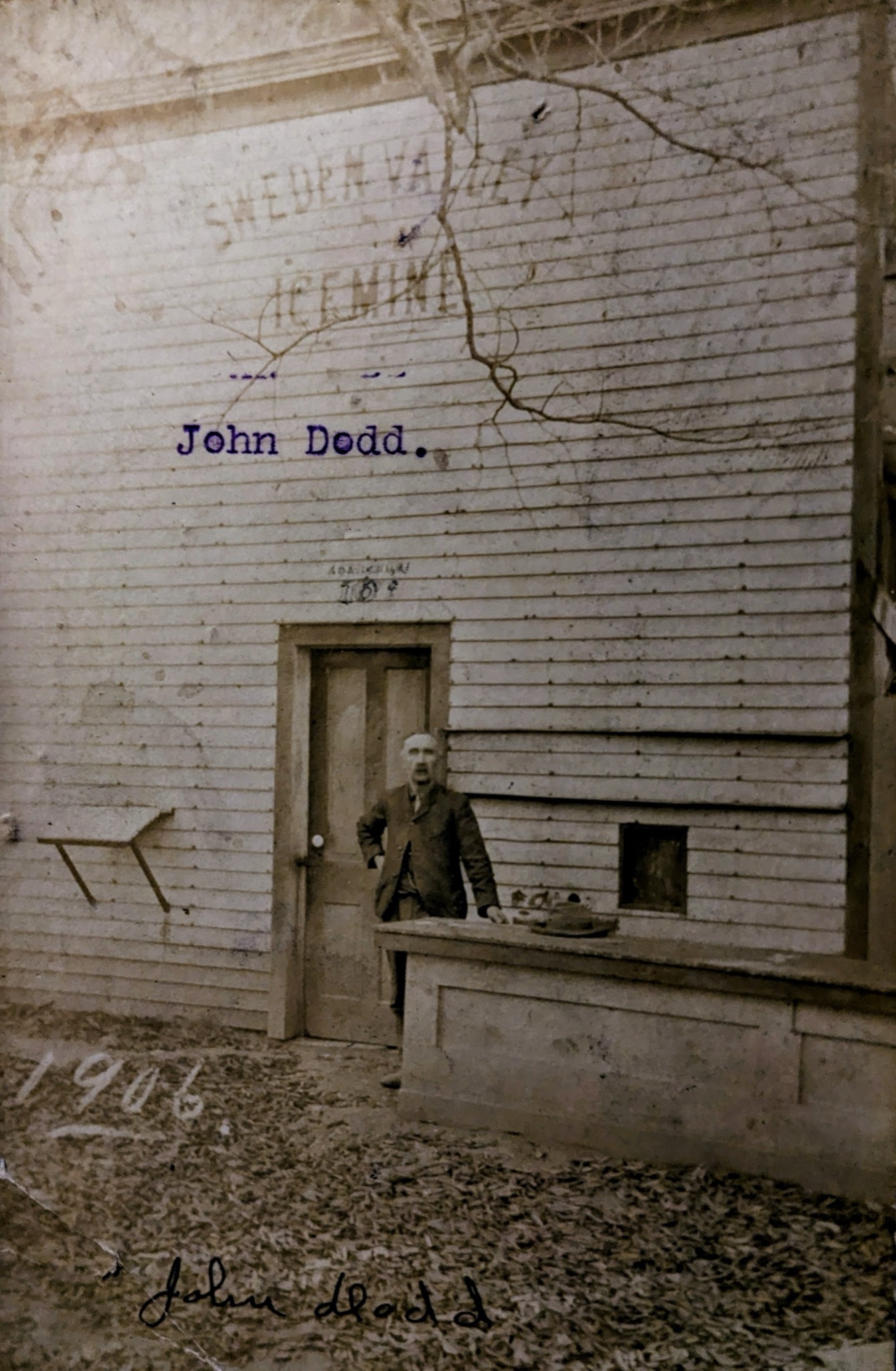
The story of the Ice Mine begins not with a search for cold, but with a quest for riches. In 1894, a Cattaraugus Indian allegedly visited Coudersport and returned from the woods near Sweden Valley with handkerchiefs tied around fine specimens of silver ore. Though he disappeared without revealing his source, the "silver fever" he ignited led a local farmer and landowner, John Dodd, to organize a search.
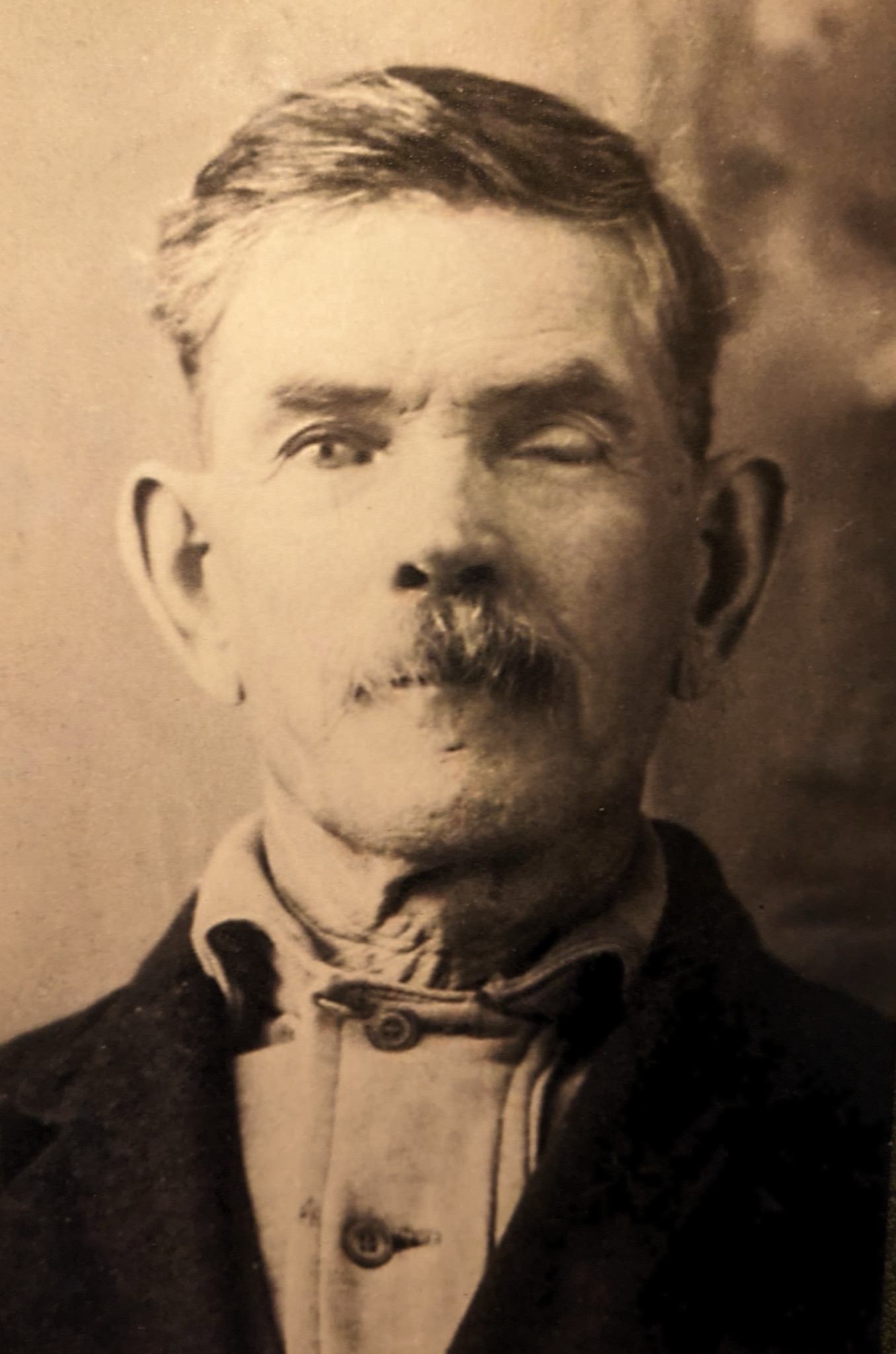
Dodd secured the services of William "Billy" O'Neil, a seasoned miner with experience in the Yukon and the American West. O'Neil, a Civil War veteran who had lost an eye to shrapnel, used a divining rod to scout the hillside. According to local lore, the rod lurched downward at a specific spot. O'Neil cleared away five inches of moss and, instead of silver, found a solid layer of ice.
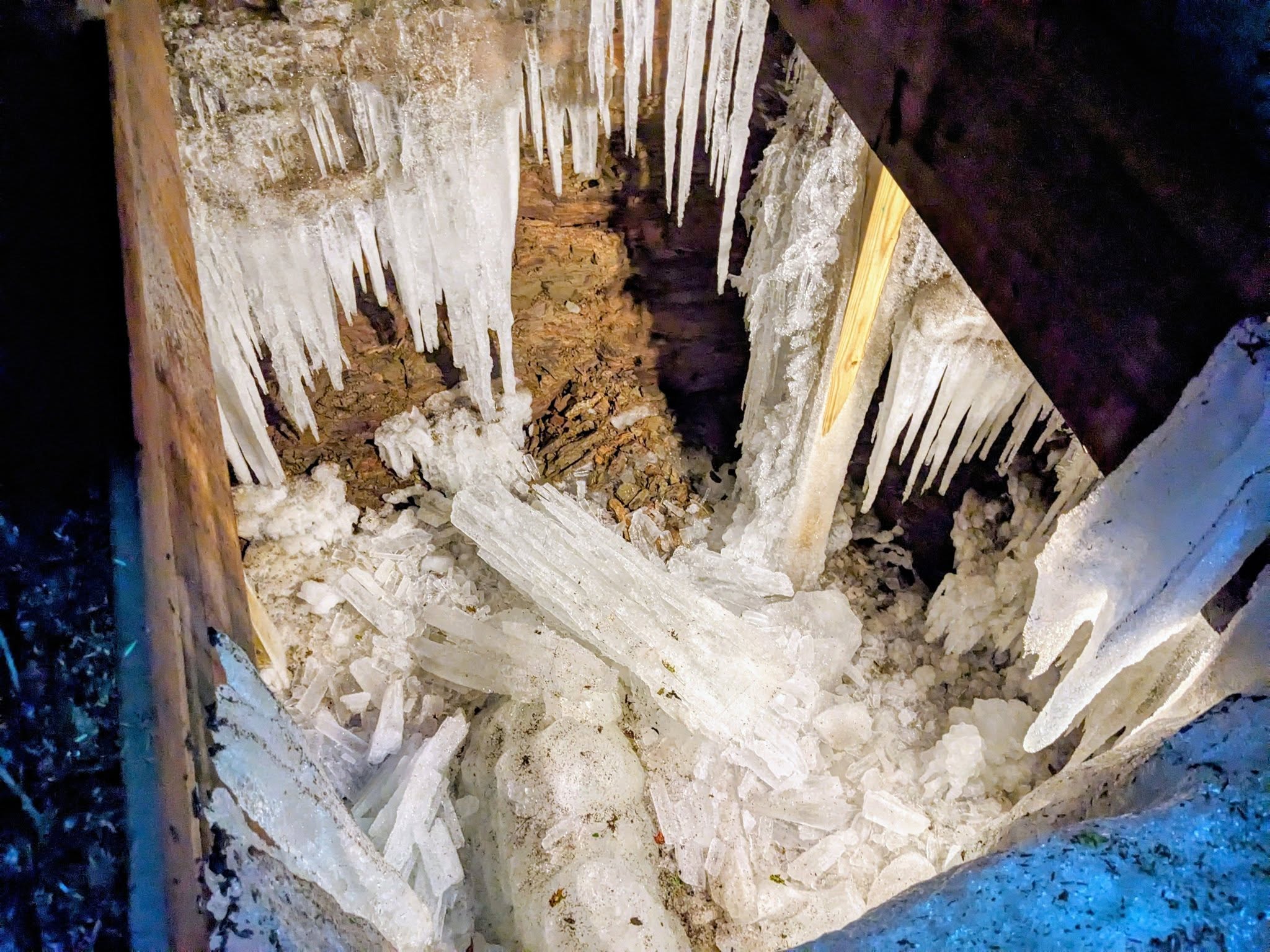
As they excavated a shaft ten feet square and twelve feet deep, they found petrified wood and fossils in a nearby crevice. However, the most peculiar discovery was an aperture at the bottom from which issued a freezing draft. Abandoned temporarily, the shaft revealed its true mystery the following spring: as the weather warmed, the ice inside began to grow. By July, the walls were coated in ice a foot thick, adorned with massive icicles.
The Science of the "Geologic Marvel"
For decades, the "freakishness" of the mine led to wild theories involving chemicals in the rocks or mysterious caverns of unknown depth. In 1921, Edwin Swift Balch addressed the American Philosophical Society to provide a scientific explanation. The Ice Mine is a glacière naturelle — a natural refrigerator.
The phenomenon relies on the density of cold air. During the winter, the heavy, cold air sinks into the porous rock formations and crevices of the mountain. This cold air is stored deep within the hillside, insulated by the mountain's structure and dense forest cover. When spring arrives and the snow melts, the water seeps into the shaft. As it meets the trapped, freezing air, it congeals into ice.
During the summer, the exterior heat actually helps "draw" the cold air out of the crevices, accelerating the formation of huge icicles — some measuring 25 feet in length. During a normal summer season, the internal temperature of the mine will remain between 26 and 32 degrees even when outside temperatures may climb into the upper 80s and 90s. Paradoxically, when winter returns, the outside air becomes colder than the air inside the mountain, causing the internal "refrigerator" to reset and the summer ice to melt away.
"…the Coudersport Ice Mine is but a small glacière, yet it is the most impressive one known in the eastern United States, the one which exhibits the best ice curtains, ice floor, and other glacière phenomena in the spring and early summer." — Edwin Swift Balch, The Coudersport Ice Mine (1921)
A Century of Hospitality and Restoration
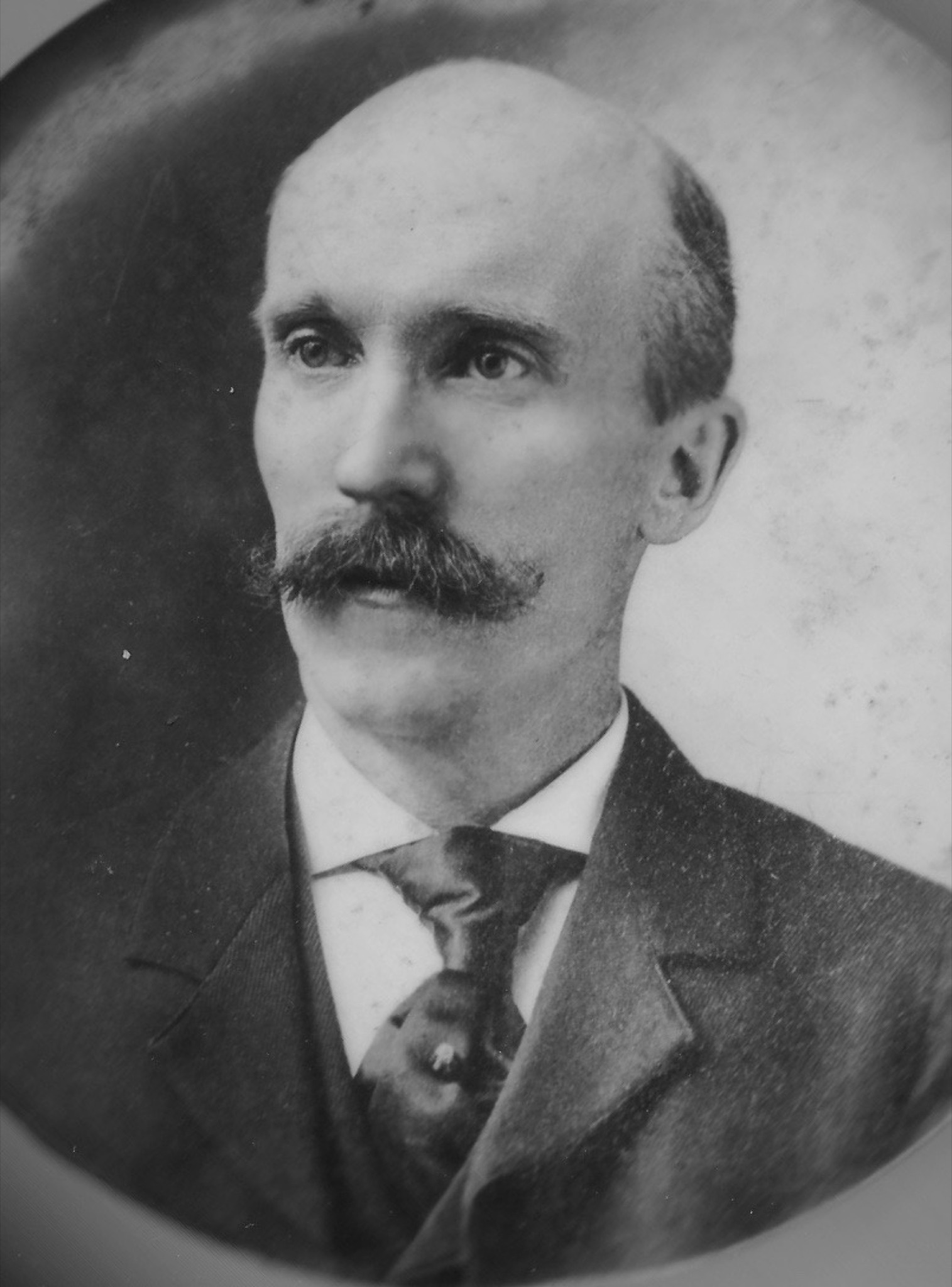
By 1901, John Dodd recognized the site's potential as a destination. He built a wooden walkway off of what is now Ice Mine Road and a pavilion at the site. Dodd charged visitors 10 cents to see the mine and enjoy a sandwich — or, on Sundays, ice cream. In 1907, the experience became more adventurous with the installation of a 17-foot wooden ladder, allowing brave guests to descend directly into the icy depths.
Ownership changed hands in 1915 when Dodd sold the property to Mount Vernon, Ohio Professor M.L. Kelly. Ticket prices jumped to 50 cents. His encouragement to build a railway and trolley from Coudersport to Sweden Valley did not meet with success.
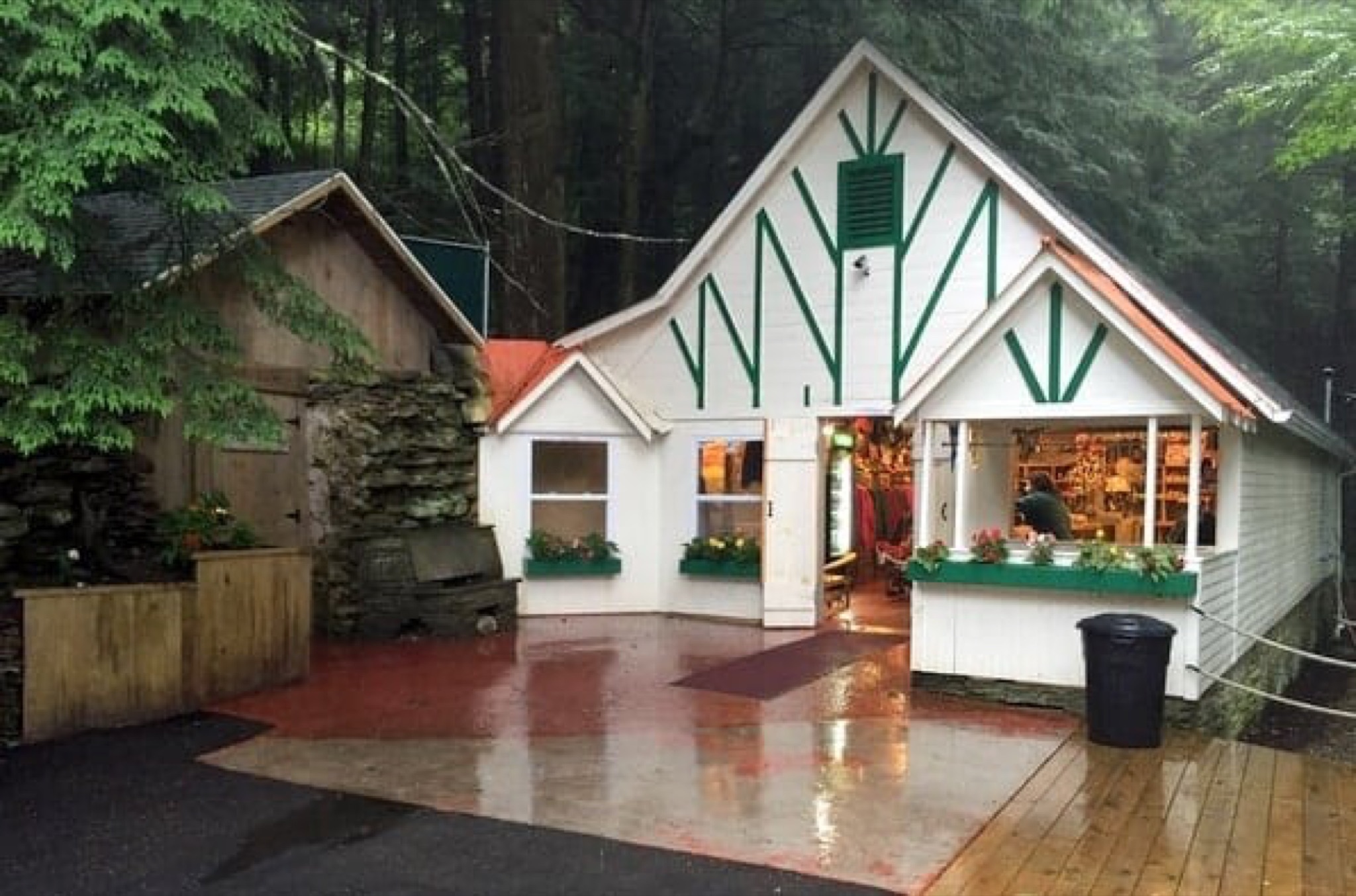
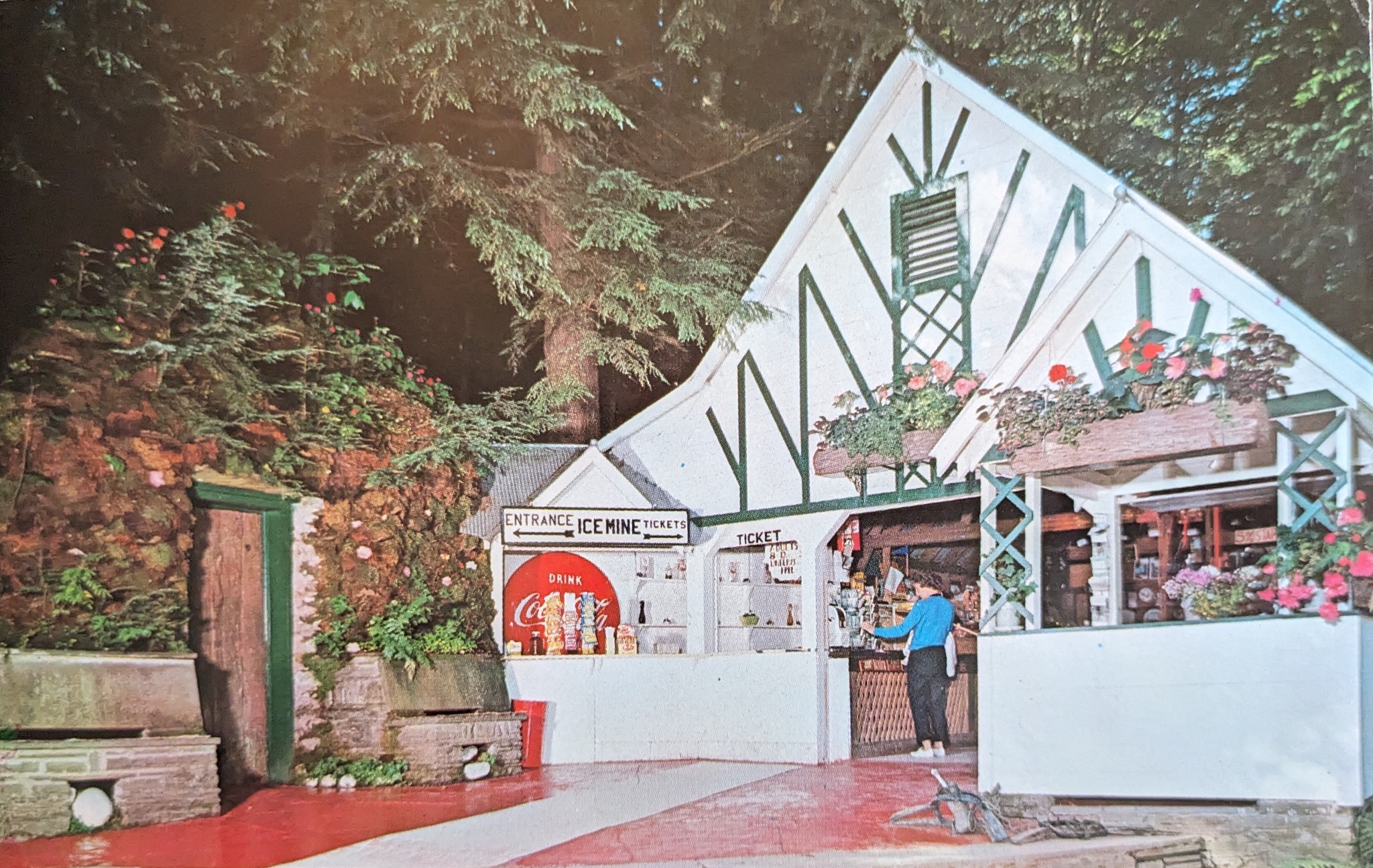
In 1921, the property was purchased by William Shear. It was the Shear family that would define the Ice Mine's aesthetic for the next 66 years. In 1938, they constructed the iconic green and white Swiss Chalet gift shop and completed much of the property's stonework.
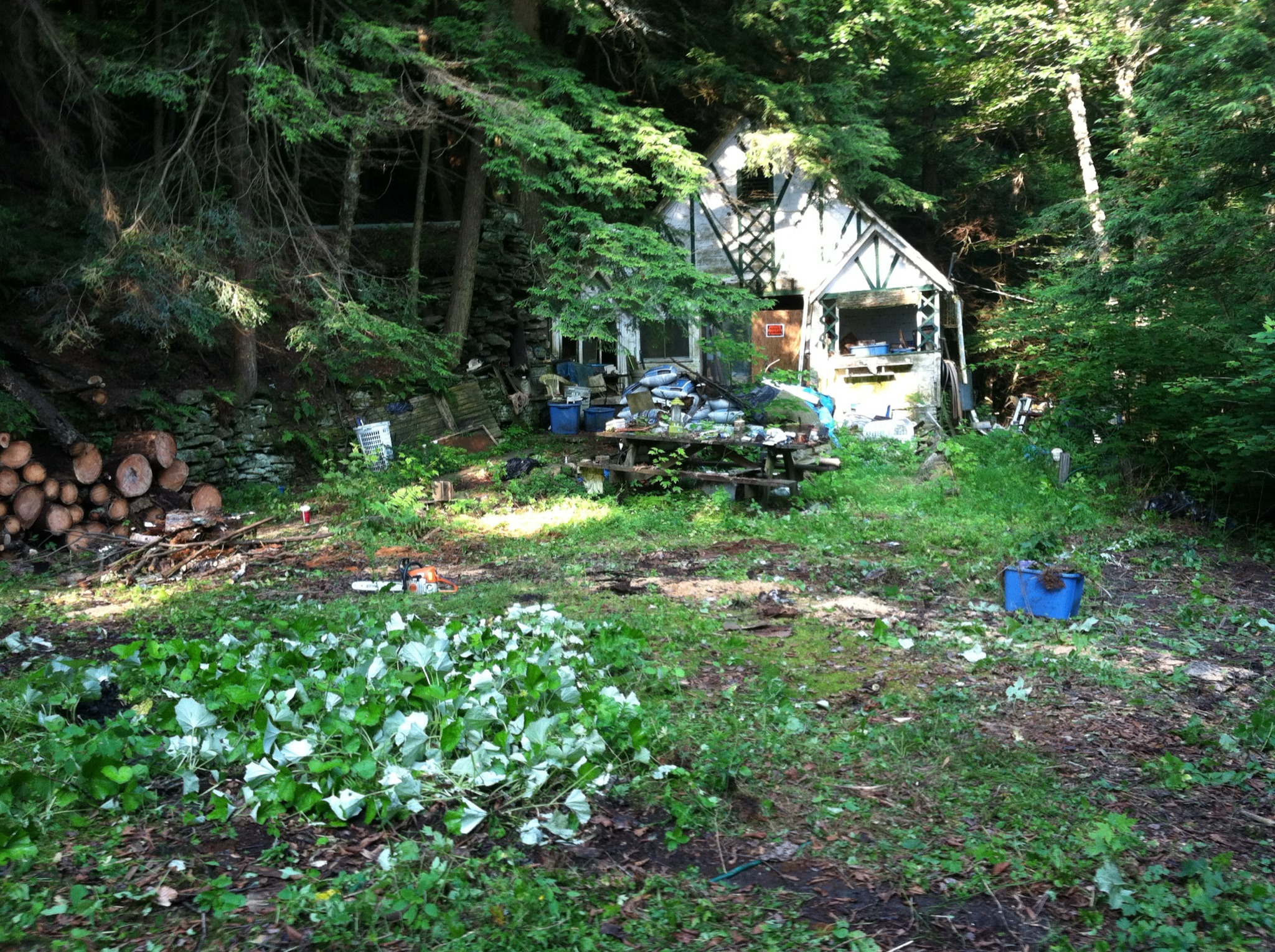
The Shear family sold the ice mine in 1987 to Ernest Mosch. It remained open to the public until 1990, at which time it closed for the next twenty-three years and fell into a state of disrepair.
After more than two decades of closure, the Buchsen family purchased the property, dedicated to restoring the site for a new generation. After a year of renovation that began in the summer of 2013, the Coudersport Ice Mine again welcomed visitors on Memorial Day weekend in May of 2014. Today, visitors can access the mine via the new Ice Mountain Trail and History Walk. Modern technology, including live interior and exterior cameras and internal temperature sensors, allows the world to monitor this "geologic marvel" in real time, ensuring that the mystery discovered by Billy O'Neil continues to fascinate 130 years later.